
Chief Minister Urges Citizens to Make Water Conservation Part of Daily Life, Protect Water Structures and Adopt Responsible Water Practices
Chief Minister Shri Sai and Union Minister Shri C. R. Patil Review ‘Jal Sanchay–Jan Bhagidari 2.0’; Chhattisgarh’s Water Conservation Efforts Praised
Target of 10 Lakh Water Structures by May 31; Dabri Construction to Strengthen Water Security and Support Farmers
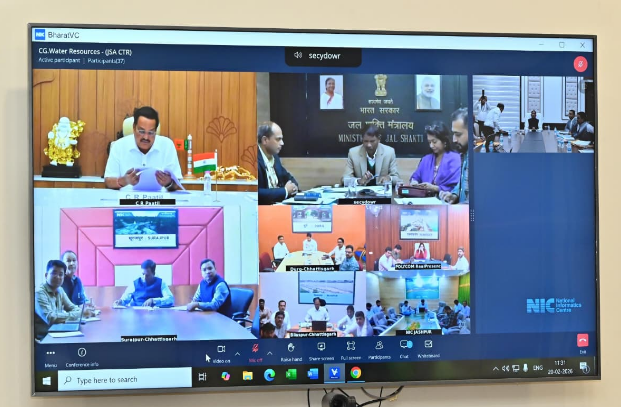
Raipur (thestates.news) | Chief Minister Shri Vishnu Deo Sai and Union Jal Shakti Minister Shri C. R. Patil jointly chaired a review meeting today at the Chief Minister’s residence office in Nava Raipur to assess the implementation of the “Jal Sanchay–Jan Bhagidari 2.0” campaign in the state. Union Minister Shri Patil joined the meeting virtually and addressed the participants. Collectors of Bilaspur, Durg and Surajpur presented detailed updates on activities undertaken under the campaign in their respective districts.
Chief Minister Shri Sai said that water scarcity in the 21st century is not only a serious environmental concern but also an economic, social and developmental challenge. He stressed that public participation is essential to make water conservation sustainable and effective. Referring to Prime Minister Shri Narendra Modi’s message of treating water like ‘prasad’, he emphasised adopting a sensitive and responsible approach towards water use. Chief Minister said the state government is committed to turning water conservation into a people’s movement under the Prime Minister’s guidance.
He noted that in the first phase of the campaign, Chhattisgarh secured second place nationally, while several districts received awards in different categories. Under the community participation model, large-scale works such as borewell recharge, rooftop rainwater harvesting, recharge shafts, soak pits and open-well recharge structures were undertaken. Chief Minister said that at present five critical and 21 semi-critical groundwater blocks have been identified in the state. Compared to 2024, five of these blocks recorded reduced groundwater extraction and improvement in water levels in 2025, indicating positive outcomes of conservation efforts.