
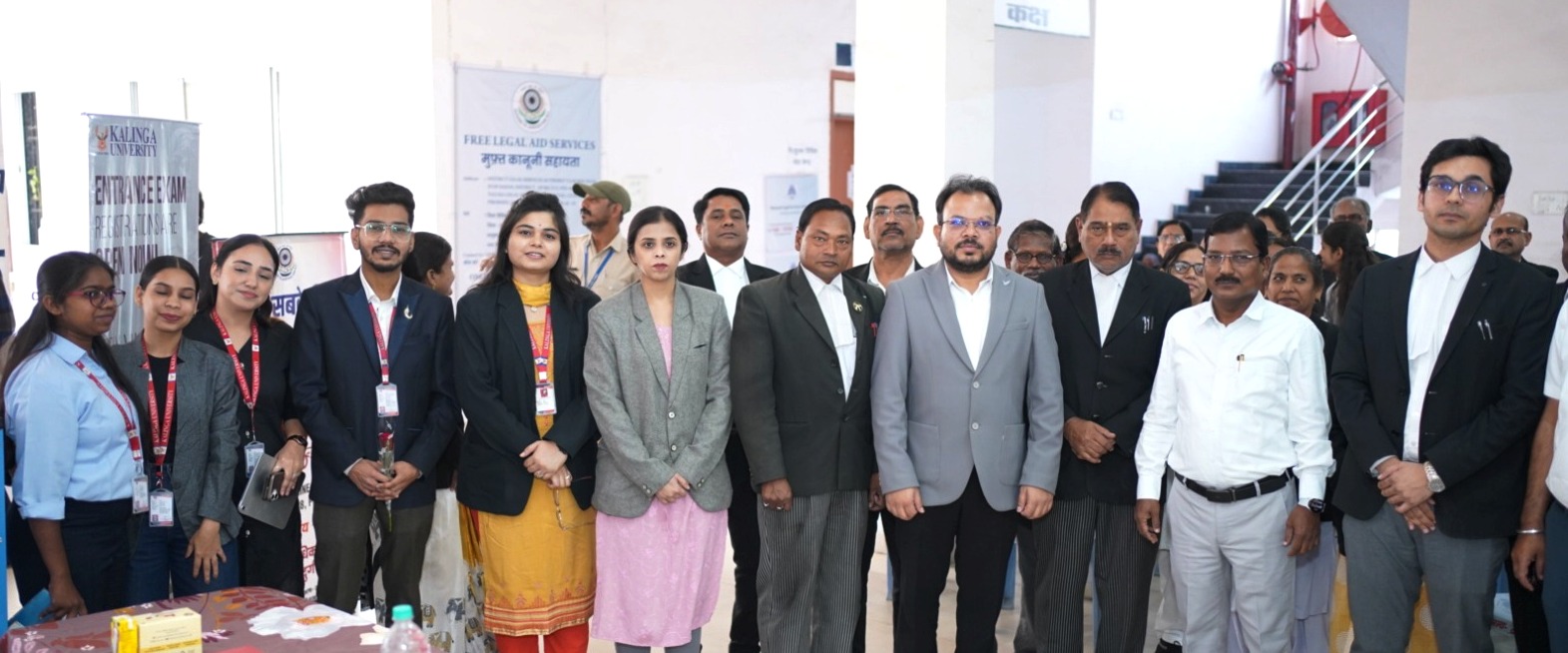
Raipur (thestates.news) | “Kalinga University, Raipur, hosted a seminar on ‘Cyber Law and Digital Evidence: Admissibility in Courts’ on 19th February 2026 at the Family Court, Bhilai 3. The event was organized in collaboration with the Advocates Association, Bhilai 3 Chhattisgarh, which graciously extended its support and facilitated the seminar within the court premises.”
The seminar witnessed active participation from a large number of practicing advocates and was graced by Adv. Sheikh Arsaf, 1st Additional district judge with Adv. Bhupesh Kumar Basant, Chief Judicial Magistrate and Adv. Abhinav Dahariya, 1st Class Magistrate, were present during the programme, reflecting strong institutional support from the legal fraternity.
The session was delivered by Ms. Harleen Kaur, Assistant Professor, Faculty of Law who focused on strengthening legal understanding of Cyber Law, with particular emphasis on digital offences, cyber regulations, and the evidentiary value of electronic records. Detailed discussion was held on the legal framework governing cybercrimes and the admissibility of digital evidence before courts of law.
In view of the increasing reliance on technology and the rise in cyber-related disputes, emphasis was laid on statutory compliance, procedural safeguards, and judicial standards applicable to electronic evidence in contemporary legal practice.
Senior judicial officers including Family Court Judges, Special Judges, Additional Sessions Judges, and Civil Judges graced the occasion, highlighting the judiciary’s commitment toward professional development in emerging legal domains.
Kalinga University has consistently organized academic–judicial initiatives and continues to strengthen collaboration between academia and the judiciary. Building upon the encouraging response received from the legal fraternity, the University now aims to expand such structured and focused programmes across the District Courts of Chhattisgarh, further reinforcing the interface between legal education and judicial practice.
The seminar concluded with a vote of thanks and reaffirmed the University’s commitment to capacity-building within the justice delivery system.