

Raipur (thestates.news)| The Leaf & Life Club of the Department of Botany at Kalinga University, in
association with the Chhattisgarh State Wetlands Authority, observed World Wetlands Day on 2nd February 2026 with a well programmed event aligned to the global theme Wetlands and Traditional Knowledge: Celebrating Cultural Heritage.
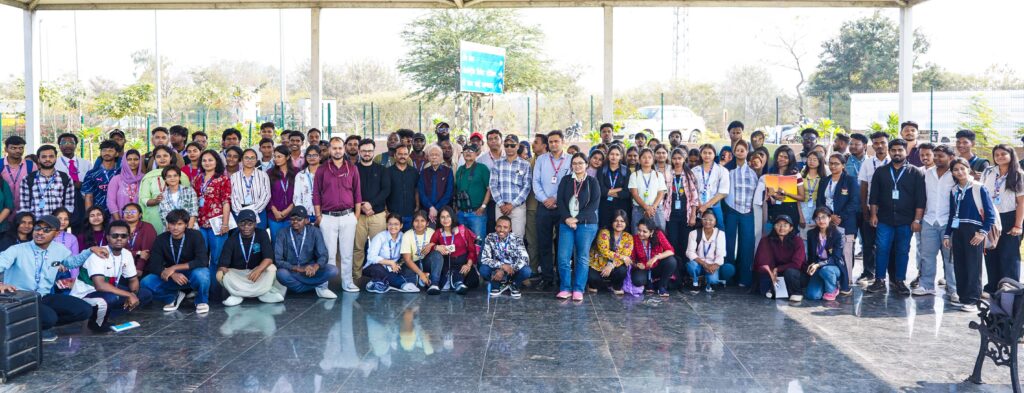
This initiative witnessed expert lectures, hands-on field activities, and thoughtful discussions on sustainable, community-led strategies for wetland conservation, underscoring the vital role of indigenous wisdom in preserving these essential ecosystems. The gathering brought together an enthusiastic mix of students from various university departments, young learners from Government Higher Secondary School, Parsada, and a cadre of distinguished naturalists and bird enthusiasts,
creating a dynamic platform for knowledge exchange and inspiration. The day’s intellectual core featured compelling addresses from eminent experts.
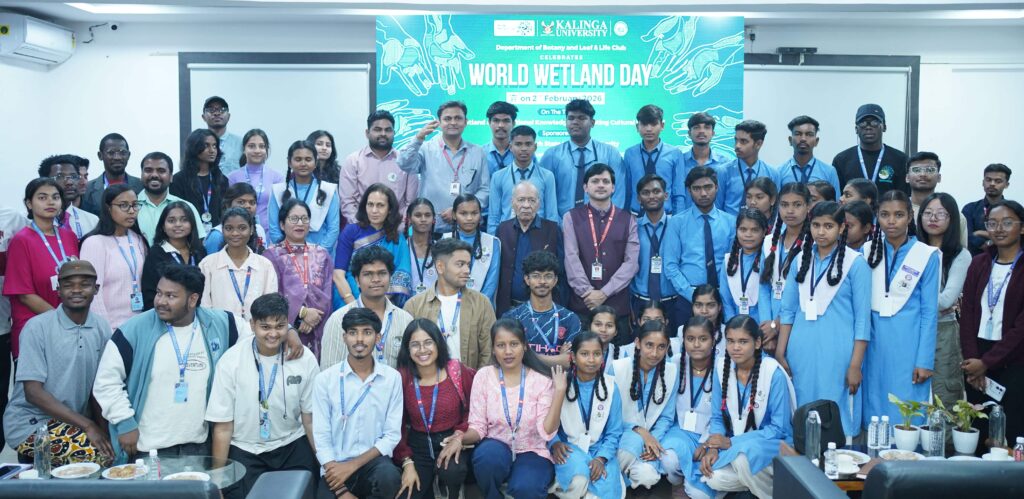
The Chief Guest for the Event was Shri AMK Bharos, revered as the Birdman of Chhattisgarh, passionately advocated for the formation of community-based management committees, stressing the need for prioritizing tangible, on-ground conservation efforts, efficient allocation and utilization of funds, and strict accountability mechanisms that extend far beyond mere conferral of Ramsar site status. The sites are recognized for their ecological, hydrological, and biodiversity
significance, playing a crucial role in supporting migratory birds and unique flora
and fauna.
The Guest of Honor Dr. Neetu Harmukh, Scientist at the Chhattisgarh State Wetlands Authority, eloquently highlighted the indispensable role of community engagement in wetland stewardship, emphasizing how local participation ensures long-term success. She advocated integrating natural ecosystems like wetlands into school curricula to foster early awareness. She stressed sensitizing students at the foundational level, enabling them to mature into conscious citizens who respect
nature and its vital components. This approach builds lifelong environmental stewardship through education.
Dr. R. Shridhar, Vice-Chancellor of Kalinga University, drew profound lessons from the ancient Yaksha-Pandava dialogue in the Mahabharata, illustrating the deep interconnection between individual responsibility, collective communal accountability, and the ethical imperative to safeguard wetlands for future generations.
Shri Tarun Tiwari, Sub-Divisional Officer of the Chhattisgarh Forest Department (Raipur Circle), elaborated on the traditional system of categorizing ponds based on their uses. This approach involves engaging local communities, learning from their experiences, and utilizing their traditional systems for conservation and restoration—empowering communities to enable effective, sustainable wetland management.
Shri Chandraprakash Mahobia, Range Forest Officer (Naya Raipur), actively contributed alongside a panel of eminent birdwatchers, including Shri Ajeet Bharos, Shri Jageshwar Verma, Shri Raju Verma, Shri Abhishek Sabat, and Shri Pokhraj Verma. The highlight was the guided birdwatching expedition at Sendh Lake, expertly led by ornithologists and senior forest officials. Participants, particularly students, had sightings of diverse avian species, including the hoopoe (Upupa epops), Indian robin (Copsychus fulicatus), black-shouldered kite (Elanus caeruleus), green bee-eater (Merops orientalis), Indian cormorant (Phalacrocorax fuscicollis), and Indian bushlark (Mirafra erythroptera).
During the field visit, invited ornithologists engaged students by explaining the feeding habits and behaviors of local and migratory birds, while sharing practical bird identification tips.
Shri Ajeet Bharos gave an insightful information on the nest building habits and abilities of different types of birds which are segmented as water birds, arboreal birds, grassland birds, raptors, and waders. The birds have an intrinsic relationship with the habitat and their roosting and nesting behaviors.
Shri Jageshwar Verma focused on migratory birds’ regular visits to Chhattisgarh’s wetlands. He attributed this to the region’s appealing habitats, abundant roosting and nesting sites, and plentiful food resources supporting diverse avian populations. Shri Raju Verma detailed the nesting behaviors of various bird species. He highlighted how seemingly harmless actions, like picking twigs from bird-frequented areas, can diminish food availability, as decaying twigs attract insects
and fungi that birds rely on.
Shri Abhishek Sabat encouraged pursuing nature and wildlife photography as an accessible hobby for all, regardless of educational background. He stressed ethical practices, such as photographing wildlife without disturbance and strictly adhering to rules in protected areas.
Shri Pokhraj Verma highlighted that birds occupy distinct habitats, making it essential to study these environments and their elements to fully comprehend avian needs. He urged viewing birds not merely as symbols of natural beauty but as vital ecosystem players requiring protection from habitat loss.
This field activity helped students connect classroom ecology lessons with Chhattisgarh’s real wetlands, sparking excitement and a call to action among participants. As a part of the programme, the Wetland Mitra oath was administered by the Deputy Dean Academic Affairs & Incharge Dean, Faculty of Science, Dr. Bendi Anjaneyulu. About 200 participants took the oath, pledging to devote themselves to wetland protection.
The event was meticulously coordinated by Dr. Faiz Bux, Dr. Abhishek Pandey, and Ms. Abhismita Roy of the Department of Botany, with dedicated support from Mr. Kamlesh Sonkar and Mr. Dulendra Sahu, all under the stewardship of Dr. Deepa Biswas, Head of the Department. The event was supported enthusiasticallyby the Department of Microbiology, Forensic Science and Bioinformatics.
This initiative aligns seamlessly with Sustainable Development Goals (SDGs) 4, 13, and 14: SDG 4 (Quality Education) by fostering environmental awareness and hands-on learning among students and communities; SDG 13 (Climate Action) through community-led efforts that leverage wetlands as natural buffers against floods, droughts, and other climate impacts; and SDG 14 (Life Below Water) by promoting the conservation and sustainable use of these vital aquatic ecosystems to
preserve biodiversity and essential services.
The event ended with high energy, motivating attendees to actively protect wetlands, document species carefully, and promote ecology. It aimed to inspire students to lead wetland conservation efforts.