
Every Rupee Meant for Public Welfare Will Be Used Transparently, Securely and Effectively
Real-Time Monitoring to Strengthen Financial Discipline and Cash Management
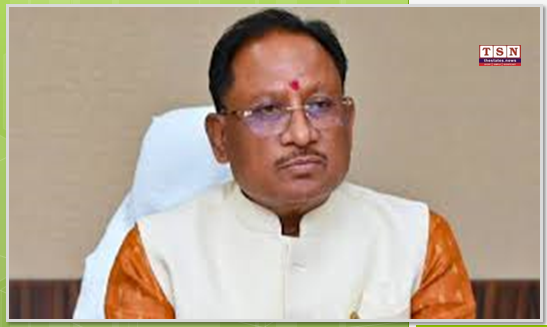
Raipur, (thestates.news) | In a significant step towards ensuring that public funds are utilised efficiently and reach the intended beneficiaries in a timely manner, the Cabinet, chaired by Chief Minister Shri Vishnu Deo Sai, has approved the implementation of the State Single Nodal Agency (S-SNA) model for state government schemes. The new system is aimed at making the flow of funds under State-funded schemes more transparent, secure, efficient and effective.
Under the S-SNA model, a centralised S-SNA Mother Account will be created for each identified scheme instead of keeping funds in several bank accounts maintained by different implementing agencies. Funds will be released only as required, and at the time of payment, the amount will be transferred directly from the S-SNA account to the vendor or beneficiary through the corresponding Zero Balance Subsidiary Account (ZBSA). This will ensure that public money does not remain idle for long periods and that available funds are put to maximum use.
Chief Minister Shri Vishnu Deo Sai said the state government’s goal is to ensure the maximum and most effective use of every rupee available for schemes. The S-SNA model would increase transparency and accountability in the flow of public funds and enable real-time monitoring of scheme implementation. The system would strengthen financial discipline while making governance more effective.
He added that instead of unnecessarily remaining in different bank accounts, scheme funds would reach beneficiaries and vendors directly at the time of need. This would lead to better utilisation of government resources and help deliver the benefits of welfare schemes to people more effectively.
Finance Minister Shri OP Choudhary said the S-SNA model would make the state’s financial management more modern, technology-enabled and result-oriented. He said the basic objective of this system is that funds not required by the government today should be used only when actually needed, rather than being kept in bank accounts in advance. This would improve the state’s cash-management capacity and ensure maximum utilisation of available resources.
He added that while the government has to mobilise resources for development and welfare schemes, government funds simultaneously remain idle in various bank accounts. The S-SNA model would play an important role in bridging this gap, helping reduce avoidable borrowing and the associated interest burden, and strengthening financial discipline.
State System to Be Implemented on the Lines of Government of India’s SNA Framework
On the lines of the Single Nodal Agency system implemented by the Government of India for Centrally Sponsored Schemes, the S-SNA model will now also be implemented for identified schemes funded by the State Government. Under this arrangement, the fund flow for schemes will begin from the State Treasury/e-Kosh to the S-SNA account. Instead of transferring funds to implementing agencies, a prescribed spending/drawing limit will be made available to them, and the amount will be released to the concerned beneficiary or vendor only at the time of actual payment.
One Scheme–One Bank Account, Near-Zero Float
A key feature of the S-SNA model is Just-in-Time Fund Release. Instead of depositing scheme funds in various accounts in advance, payments will be made only when actually required. This will reduce funds lying unnecessarily in bank accounts and help ensure a near-zero float of scheme funds. This system will include a Mother–Child Account mechanism, cover both DBT and non-DBT payments, and may bring identified implementing agencies at the district, block, panchayat and village levels within its ambit.
Real-Time Monitoring to Increase Transparency and Accountability
The S-SNA model will enable real-time monitoring of the fund flow and expenditure of schemes. Departments will get clear information on available funds, approved spending limits, actual expenditure and unutilised amounts. A maker-checker-based audit trail in the digital system will strengthen monitoring of financial transactions and help establish effective control over the possibilities of misappropriation, unauthorised payments and banking fraud. Finance Minister Shri OP Choudhary said that digital audit trails and real-time monitoring would provide clear information on fund utilisation at every level. This would reduce the possibility of financial irregularities and help departments plan their resources and expenditure better.
Control Over Idle Funds and Avoidable Debt Burden
Under the present system, funds are often withdrawn before they are actually required, leaving large amounts idle in various departmental accounts. The proposed system will address this problem, including issues such as approximately ₹530 crore lying idle in departmental accounts and nearly ₹100 crore idle in RBI’s DEAF accounts. While the government has to borrow and pay interest for its schemes, government funds simultaneously remain idle in various bank accounts. Better management of available funds under the S-SNA model will reduce the need for avoidable borrowing and help control the interest burden and revenue deficit.
Interest Earned Will Be Deposited in the State’s Consolidated Fund
Interest earned from the management of scheme funds under the S-SNA system will be deposited in the state’s Consolidated Fund. This will ensure more efficient use of public financial resources and strengthen the State’s cash-management capacity.
Will Also Help Address Objections Raised by the Accountant General’s Office
The new system will resolve the problem of funds remaining idle for long periods in the accounts of DDOs and other implementing agencies. It will also reduce difficulties related to manual reconciliation, delayed utilisation certificates and offline verification. Digital fund flow and audit trails will make financial reporting more transparent and timely.
Implementation Will Be Phased
Six major stages have been set for implementing the S-SNA model: identification of the scheme, approval by the Finance Department, allocation of Scheme Code, e-Kosh mapping, opening of S-SNA and ZBSA accounts, and payment from the Treasury to the beneficiary/vendor through the S-SNA and Implementing Agency.
This system will apply to identified schemes funded by the state government and other identified schemes of departments. Both DBT and non-DBT schemes, along with implementing agencies at the district, block, panchayat and village levels, may be brought within its scope. Centrally Sponsored Schemes covered under PFMS-SNA/SPARSH, Central Sector schemes, and schemes where DDOs make payments directly through e-Kosh will remain outside the scope of this system.
The cabinet has approved the implementation of the S-SNA model and authorised the Finance Department to take the necessary action in this regard. This system will bring new strength to transparent, efficient and disciplined fund flow in the state, along with better financial management and good governance.